
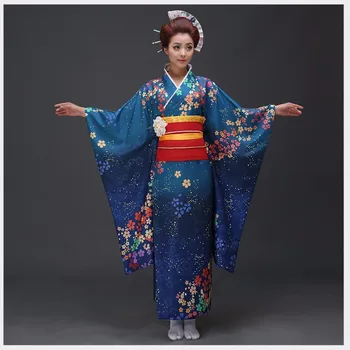
Maiko sleep with their necks on small supports (takamakura), as a substitute of pillows, so that they maintain their hairstyle good.[40] Even if there aren’t any accidents, a maiko will want her hair styled every week. Many fashionable geisha use wigs in their professional lives, whereas maiko use their pure hair.[88] Either have to be frequently tended by highly skilled artisans. Traditional hairstyling is a slowly dying art.
Federal Republic of Nigeria – Study for Poverty Profile (Africa) JICA Japan (March 2011) Retrieved 16 August 2017. Panagariya & Mukim (2014), A comprehensive analysis of poverty in India. Asian Development Review, 31(1), pp. 1-52. Krishna & Shariff (2011), The irrelevance of nationwide methods?
The percentage of births to unmarried women in selected countries, 1980 and 2007.[31] As could be seen in the figure, Japan has not followed the development of different Western nations of youngsters born outdoors of marriage to the same diploma. The establishment of marriage in Japan has modified radically over the past millennium. Indigenous practices tailored first to Chinese Confucianism during the medieval era, after which to Western ideas of individualism, gender equality, romantic love, and the nuclear family in the course of the fashionable period. Customs as soon as exclusive to a small aristocracy gained mass popularity as the population grew to become more and more urbanized.
This was revised in 1993, and absolutely the poverty line was set at $1.08 a day for all international locations on a buying power parity (PPP) foundation, after adjusting for inflation to the 1993 US dollar. In 2005, after extensive studies of price of residing across the world, The World Bank raised the measure for world poverty line to mirror the observed greater cost of residing.[4] Thereafter, the World Bank determined poverty charges from those living on lower than US$1.25 per day on 2005 PPP basis, a measure that has been broadly used in media and scholarly circles. The Saxena Committee report, utilizing data from 1972 to 2000, separated calorific intake other than nominal revenue in its financial analysis of poverty in India, and then acknowledged that 50% of Indians lived beneath the poverty line.[87] The Planning Commission of India, in distinction, decided that the poverty rate was 39%. Poverty was intense during colonial era India.
Japan has a few of the highest rates of child poverty within the developed world, based on a Unicef report. It ranked Japan thirty fourth out of 41 industrialised countries. According to Japan’s Health Ministry statistics, as of May 2017, 16% of Japanese kids stay below the poverty line.
Marriage in Japan is a authorized and social establishment at the center of the family. Couples are legally married once they’ve made the change in standing on their family registration sheets, without the need for a ceremony. Most weddings are held both based on Shinto traditions or in chapels in accordance with Christian marriage traditions. During the 21st century, Japanese women are working in greater proportions than the United States’s working female inhabitants.[four] Income ranges between women and men in Japan aren’t equal; the common Japanese woman earns forty % lower than the typical man, and a tenth of administration positions are held by women.[4] Women are often discovered partially time or short-term jobs. seventy seven% of these jobs were crammed by women in 2012.[19] Among women who do work, women-only unions are small in dimension and in relative energy.[20]A common occupation for younger women is that of workplace lady, that is, a feminine workplace worker who performs typically pink collar tasks similar to serving tea and secretarial or clerical work.
There is a government policy that ensures healthcare and pensions for spouses who make less than 1.3 million yen, or about $11,500, thus discouraging couples from both working.[15] Japanese corporations have extensive benefits for men because they are expected to offer for their households at home.[thirteen] Job salaries and advantages are additionally heavily influenced by tenure and seniority, making it exhausting for ladies with households to advance in common employment.[15] Furthermore, three-era households, which incorporates the grandparents, mother and father, and kids, are still very common in Japan.[14] In these, the husband’s salary and benefits are anticipated to supply for the whole household while the spouse stays residence and cares for the elderly and children. underneath a standard surname. Since 1947, couples have been permitted to decide on either the surname of the husband or spouse, according to a ban on separate surnames first imposed in 1898.
The tea homeowners are entrepreneurs, whose service to the geisha is extremely essential for the society to run easily. Infrequently, men take contingent positions corresponding to hair stylists,[forty] dressers (dressing a maiko requires appreciable strength) and accountants,[sixteen] however men have a limited function in geisha society. By the 1830s, geisha were thought-about a number of the leaders of fashion and style in Japanese society, and had been emulated by women on the time.[17] Many trends that geisha began turned broadly popular and proceed to this present day; the carrying of haori by women, for example, was begun by geisha in the Tokyo hanamachi of Fukugawa in the early 1800s. National Institute of Population and Social Security Research (IPSS). “Attitudes towards Marriage and Family amongst Japanese Singles.” 2011.
That social phenomenon has the potential to make dating appear annoying, inconvenient, and unenjoyable, however it additionally generally means that not wanting so far doesn’t necessarily correlate to wanting to be single for life, even when extending the “simply associates” stage of a relationship means postponing taking a sizzling spring bathtub japanese mail order brides collectively. The proportion of births to unmarried women in chosen countries, 1980 and 2007.[85] As can be seen in the determine, Japan has not adopted the development of other Western nations of children born exterior of marriage to the identical diploma.
Rural poverty dynamics in states and areas of India, 1993–2005. World Development, 39(4), pp. . World Bank’s $1.25/day poverty measure- countering the newest criticisms The World Bank (January 2010). Retrieved sixteen August 2017.